Diabetes

Diabetes is on the rise in South Africa, particularly among younger patients. Make sure you know your risk, and ask your doctor to screen you and your family members for diabetes!

Who needs to get tested for diabetes?

  • All adults older than 45
  • Women with a history of gestational diabetes (diabetes during pregnancy)
  • Women with Polycystic Ovarian Syndrome (PCOS)
  • Anyone with high blood pressure
  • Anyone with high cholesterol
  • Anyone who is overweight or obese (BMI above 35)

How will I know if I have diabetes?

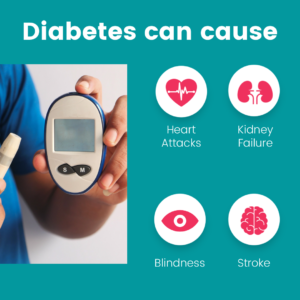
Most people with Type 2 diabetes have no symptoms until their diabetes is very severe, or they have complications (such as a heart attack or stroke). This is why regular testing at your GP practice is so important!

 Symptoms of diabetes may include:

  • Needing to urinate often
  • Feeling more thirsty than usual
  • Erectile dysfunction
  • Frequent bladder infections or vaginal yeast infections (thrush)
  • Frequent skin or chest infections

Testing for diabetes

If you have no symptoms of diabetes, we will do a screening test followed by a second test to confirm the diagnosis. If you have symptoms already, we just need one test to confirm your diagnosis.

Tests results indicative of diabetes include:

  • Fasting blood sugar of 7 or higher
  • Random blood sugar of 11.1 or higher
  • HbA1c 6.5% or higher (this is the percentage of red blood cells with sugar attached to them, and tells us how your sugar has been over the past 3 months)

Test results indicative of pre-diabetes include:

  • Fasting blood sugar between 5.6 and 6.9
  • Random blood sugar between 7.8 and 11
  • HbA1c of 5.7 to 6.4%

Treatment for diabetes

  • Lifestyle: Eating more fruit and veg and less processed food, and exercising regularly, is essential.
  • Medications:
    • We usually start with tablets, and monitor your sugar to decide if you need injections.
    • Most patients can be well-controlled on tablets if they live a healthy lifestyle; very few patients will need insulin.
    • If you are older than 40, we also recommend a cholesterol tablet called a statin. Even if your cholesterol is normal, taking these tablets has been shown to reduce your risk of heart attack and stroke, as they reduce the inflammation in your blood vessels!

Is Type 2 diabetes reversible?

Yes! With loss of weight and dietary changes, many people can reverse their diabetes. Just a 1% reduction in your HbA1c leads to:

  • 14% lower risk of heart attack
  • 43% lower risk of amputation or death from gangrene
  • 27% lower risk of eye, nerve and kidney damage
  • 21% lower risk of dying from diabetic complications

Small changes make a really big difference!
References: